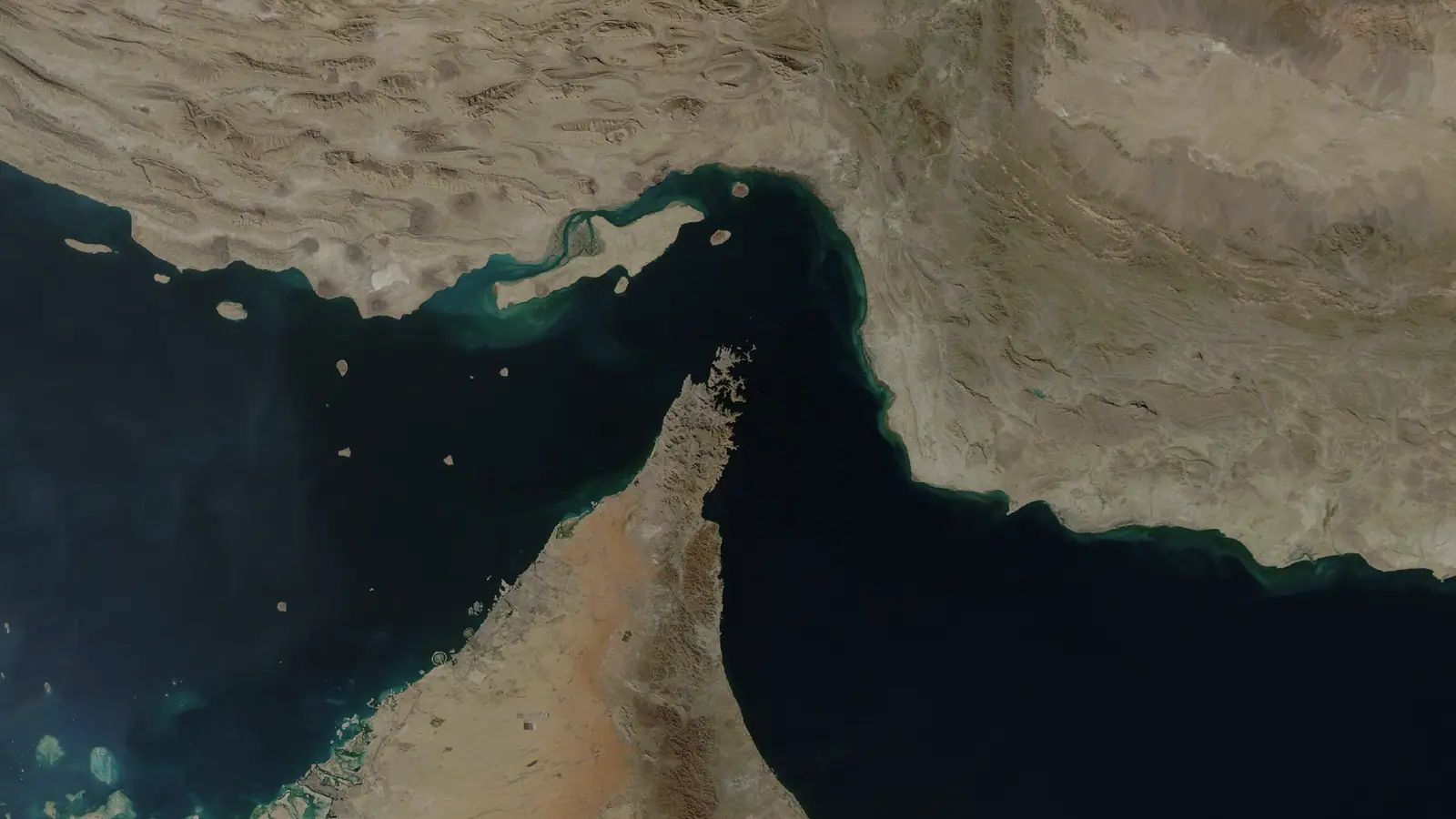
Strait of Hormuz disruption
After U.S.–Israeli strikes on Iran began on 28 February 2026, Iran moved to close the Strait of Hormuz and attack shipping; Dubai crude peaked at $157.66 a barrel and the won broke 1,500 per dollar (KERI). Naphtha eased to $635 after a U.S.–Iran 'end-of-war MOU' in June but was back at $841 on 29 July as ship attacks resumed and the strait was re-closed, and on 3 August KOTRA counted only 9 of 24 GCC coastal ports operating normally. Korea takes 70.7% of its crude imports from the Middle East, and KITA warns the shock is spreading from fuel prices to process-critical inputs such as naphtha, helium and bromine.
How it unfolded.
- 2026-02-28
After the U.S.–Israeli 'Epic Fury' operation began, Iran moved to close the Strait of Hormuz and attack shipping, sharply raising uncertainty across energy and logistics networks (KERI). source ↗
- 2026-03-23
The won weakens to 1,517.3 per dollar intraday, its weakest level since 2009 (KERI Focus). source ↗
- 2026-05-11
Seven Korean tankers carrying 14 million barrels of crude, about five days of Korean consumption, remain stranded near the strait (Asia Economy). source ↗
- 2026-06
A U.S.–Iran 'end-of-war MOU' is signed and naphtha eases to $635 (KOTRA). source ↗
- 2026-08-03
KOTRA's fourth post-Middle East task force: renewed Iranian ship attacks and a re-closure of the strait; naphtha back at $841 (29 July); only 9 of 24 GCC coastal ports operating normally. source ↗
- 2026-09-23
Korea adopts its first resource-security master plan: cut crude dependence on any single region to 50% or less by 2035, add 20 million barrels of storage by 2030 and stock condensate to keep naphtha output going (SNM News). source ↗
What the markets are saying.
- 05.11 Seven Korean tankers stranded near Hormuz
- 08.03 KOTRA: ship attacks resume and the strait is re-closed
Daily closes, last six months. Source: Yahoo Finance; refreshed with each Global Watch edition (last update Oct 9, 2026, 6:37 AM KST). Indicators only, not investment advice.
Questions for your purchasing and risk teams
- Flag every BOM item that relies on Middle East inputs (naphtha, helium, bromine, LNG, ammonia) and recalculate dependence by where the raw material is produced, not where you buy it.
- Record days of stock and the time needed to switch to an alternative supplier (3–6 months, or longer) for each critical input.
- Check force-majeure clauses and who pays war-risk insurance and freight surcharges in supply and shipping contracts.
- Build 10–14 extra transit days (Cape of Good Hope routing) into production plans and delivery promises.
- Agree a rule for passing oil and currency moves into quotes; KIET estimates manufacturing costs rise about 0.71% for each 10% rise in oil prices.
- Keep public support channels on your emergency contact list: KOTRA's supply-chain help desk and KOBC's maritime early-warning system (pilot due November 2026).
What HELIOS does about it
- The HELIOS engine continuously monitors open sources for Hormuz and Red Sea transits, GCC port status and public notices from bodies such as KOTRA and KOBC.
- Korean-language executive alerts when a re-closure, port shutdown or force-majeure declaration is confirmed.
- Ground Truth field verification, within the law, that alternative suppliers in Korea and Southeast Asia have real, operating plants.
- Vision AI forensic checks of alternative suppliers' certificates of origin, shipping documents and site photos for tampering.
As of 2026-10-05. Figures are as published by each source. Not legal or investment advice.
Is your supplier list exposed?
Send us the suppliers you worry about. We'll show you what open sources say and what we would check on site.